Muriatic Acid for Pools: Safe Dosing and pH Adjustment Guide
Muriatic acid (hydrochloric acid) is the standard chemical for lowering pool pH and total alkalinity. It works fast, costs less than alternatives, and is available at any pool supply or hardware store. But it’s also corrosive, and handling it without the right setup leads to damaged clothes, chemical burns, or worse. We recommend reading this entire guide before opening the jug. For the broader water balance framework, see our complete pool chemistry guide.
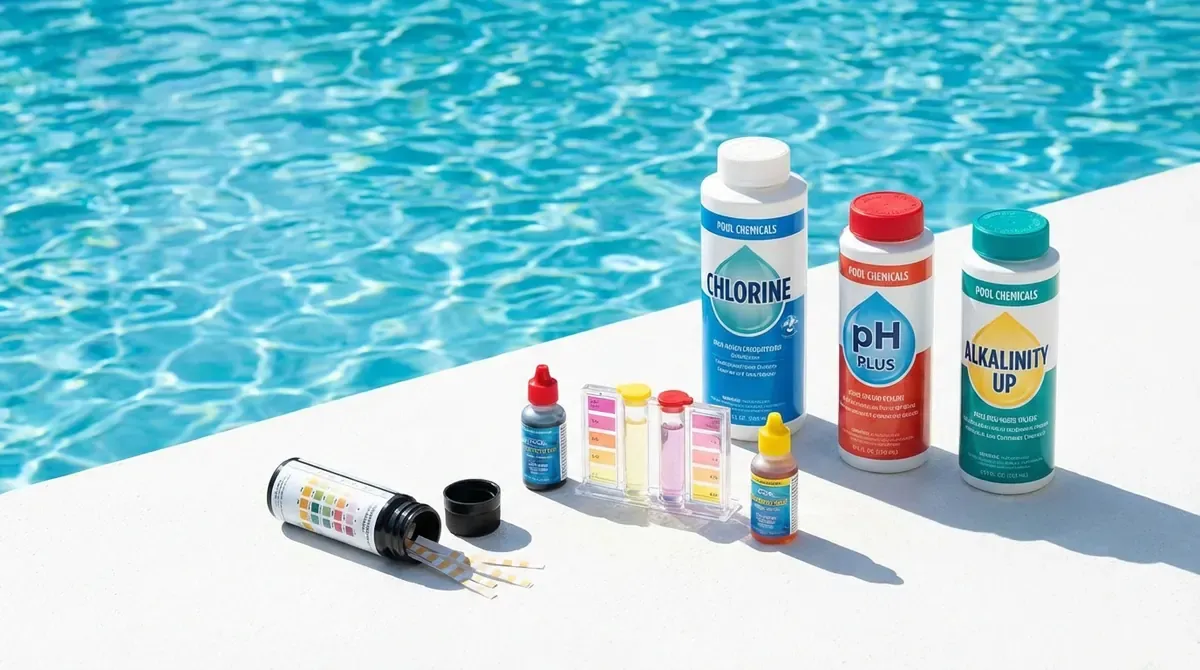
What you need before you start (safety first)
Muriatic acid is hydrochloric acid at 31.45% concentration. Treating it like a pool enzyme or algaecide is how people end up with ruined clothing and chemical burns. Get the following in place before opening the jug.
PPE required:
- Acid-resistant gloves, nitrile or rubber (not cotton or latex)
- Safety goggles, sealed goggles, not open safety glasses
- Old clothes, acid causes permanent irreversible bleaching; wear something you’ll discard
- Near a water source, you need immediate access to flush skin or eyes
Conditions:
- No wind, airborne acid mist is a respiratory hazard; never add muriatic acid in breezy conditions
- Daytime visibility, you need to see where you’re pouring
The AAA Rule. Always Add Acid to water, never water to acid. This is the CPO safety standard, not a suggestion. Adding water to concentrated acid causes a violent exothermic reaction that can splatter caustic liquid. Always add the acid to water in a bucket, or pour it directly into the pool water. See CPO pool chemical safety standards{:target=“_blank”} for the full procedure.
Never:
- Siphon muriatic acid by mouth
- Mix muriatic acid with any other pool chemical in a bucket
- Add muriatic acid and chlorine shock within 24 hours of each other
According to CDC hydrochloric acid safety guidelines{:target=“_blank”}, hydrochloric acid vapor exposure can cause severe respiratory damage even at low concentrations. The no-wind rule is not optional.
What muriatic acid does in your pool
Muriatic acid lowers both pH and Total Alkalinity simultaneously. Most pool owners know it as a pH reducer, but the TA effect is equally important, and ignoring it creates a new problem.
The standard pool-grade muriatic acid is 31.45% concentration (hydrochloric acid). To lower pH by 0.2 in a 10,000-gallon pool, add 10 fluid ounces, approximately 1.25 cups, poured slowly around the pool perimeter with the pump running.
Why the dual effect matters:
- If both pH and TA are elevated, muriatic acid handles both at once, that’s the ideal use case
- If only pH is high and TA is already at or below 80 ppm, adding acid will drop TA into a dangerous range, causing pH to bounce uncontrollably
- If TA is low, use baking soda (sodium bicarbonate) to raise it first, then use acid to fine-tune pH
Dry acid (sodium bisulfate) is an alternative that’s safer to handle than liquid muriatic acid, it’s a powder, no fumes, no splash risk. The tradeoff: it costs more per unit of pH reduction and acts slower. We consider dry acid a legitimate option for homeowners nervous about liquid acid. The dosing is different (follow the label), but the chemistry is the same.
When do you need muriatic acid?
You need muriatic acid if:
- pH is above 7.8 (especially above 8.0, where chlorine efficiency drops severely)
- Total Alkalinity is above 120 ppm and you need to bring it down
- You have a saltwater generator (SWG), SWGs naturally drive pH upward; acid is the standard correction
- Water is scaling or cloudy from high pH
You do NOT need muriatic acid if:
- pH is below 7.4 (use soda ash / sodium carbonate to raise it)
- TA is below 80 ppm (use baking soda to raise it, do not use acid)
Warning: Always test both pH AND Total Alkalinity before adding acid. If TA is already below 80 ppm, adding acid to fix pH will push TA further down and cause pH to become unstable, it will swing wildly and resist adjustment. The TFP community calls this pH bounce, and it’s one of the most common mistakes in pool chemistry.
Video guide
Video: “How to Safely Add MURIATIC ACID to Your Pool” by Swim University
How much muriatic acid to add (dosing tables)
These tables are for standard pool-grade muriatic acid at 31.45% concentration. We always verify the concentration on the label before applying these figures. If you’re using a different concentration (some hardware stores sell 20% or 28%), adjust accordingly or use a dedicated calculator.
To lower pH (31.45% muriatic acid):
| Pool Size | 0.2 decrease | 0.4 decrease | 0.6 decrease |
|---|---|---|---|
| 5,000 gal | 5 oz | 10 oz | 15 oz |
| 10,000 gal | 10 oz | 20 oz | 30 oz |
| 15,000 gal | 15 oz | 30 oz | 45 oz |
| 20,000 gal | 20 oz | 40 oz | 60 oz |
To lower Total Alkalinity:
- 1 quart (32 oz) per 10,000 gallons lowers TA approximately 10 ppm
- Add with pump OFF for more efficient TA reduction (acid sits concentrated in one area)
- Test 4 hours later; aerate the pool (jets, waterfall) afterward to allow pH to stabilize
Do not add more than the 0.6 decrease dose in a single application. Larger single doses can create dangerously low-pH dead zones near the addition point. Multiple smaller doses with 4-hour intervals between them are safer and easier to control.
For a precise calculation based on your current readings and pool volume, see our muriatic acid dosage calculator.
Step-by-step: how to add muriatic acid to your pool
- Test pH and TA, confirm the readings; calculate dose from the table above
- Gear up, gloves, goggles, old clothes before opening the jug
- Turn ON the pump, for pH adjustment, the acid needs to circulate immediately
- For pH adjustment: pour acid slowly along the pool perimeter, near return fittings; walk and pour rather than dumping in one spot
- For TA adjustment: turn pump OFF; pour acid into a single deep-end area; let it sit concentrated for 1 hour before turning pump back on, this drives down TA more efficiently while having less dramatic pH impact
- Wait at least 4 hours before retesting, acid needs time to fully disperse and react
- Retest and adjust if needed, repeat in smaller doses until target is reached
Emergency: If acid splashes on skin, flush immediately with large amounts of water for at least 15-20 minutes. Remove contaminated clothing during flushing. Seek medical attention if irritation persists.
The TA/pH ordering problem (why sequence matters)
This is where most pH problems originate. Muriatic acid lowers both pH and TA simultaneously. Adding it in the wrong sequence creates a new imbalance for every one it fixes.
The rule: always adjust Total Alkalinity before adjusting pH.
Why: Total Alkalinity is the chemical buffer that controls how pH responds to additions. In low-TA water, pH swings violently with even small chemical additions. Adding acid to a pool with TA already below 80 ppm will push TA further down and make pH impossible to stabilize.
Situation-by-situation guidance:
- Both TA and pH too high: use muriatic acid, it lowers both simultaneously; one treatment addresses both problems
- Only pH is high, TA is normal (80-120 ppm): use muriatic acid in smaller doses; or use sodium carbonate (soda ash) if you want to raise pH without affecting TA
- Only pH is high, TA is low (<80 ppm): add baking soda first to raise TA to 80-100 ppm; then fine-tune pH with small acid doses
- Only TA is high: use acid with pump OFF (TA-targeting method above); aerate after to let pH recover naturally
The TroubleFreePool alkalinity and pH guide{:target=“_blank”} explains the TFP approach of targeting TA at 50-90 ppm for liquid chlorine users rather than the mainstream 80-120 ppm, a useful read if you’re repeatedly fighting high pH.
For pool stabilizer dosing guide, that’s the companion guide if you also need to adjust CYA levels alongside pH work.
FAQ
How long after adding muriatic acid can I swim?
Wait at least 30 minutes after adding muriatic acid, and test pH before anyone enters the pool. pH should be between 7.2 and 7.8 before swimming. For larger doses (0.4 decrease or more), wait 1-2 hours and retest. If pH is still below 7.0, do not swim until it recovers, low pH causes eye irritation and can corrode metal equipment and damage pool surfaces.
Can I add muriatic acid and chlorine at the same time?
No. Never add muriatic acid and chlorine shock within 24 hours of each other. The combination can create concentrated chlorine gas near the addition point, which is toxic. Add acid, run the pump for 24 hours, then add chlorine, or add chlorine first, wait 24 hours, then add acid.
What strength muriatic acid should I use for pools?
Standard pool-grade muriatic acid is 31.45% concentration. This is the strength all dosing tables and calculator tools assume. Some hardware stores sell more dilute versions (20% or 28%) that are safer to handle, but you’ll need to add more to get the same pH reduction. Check the label before using a table.
What is dry acid and is it safer than muriatic acid?
Dry acid (sodium bisulfate) is a granular product that achieves the same pH reduction as muriatic acid but in a solid form with no fumes and no splash risk. It’s easier to handle and store, which is why it’s popular with homeowners nervous about liquid acid. The downsides: it costs more per unit of pH reduction, it lowers TA slightly less efficiently than muriatic acid, and it takes longer to fully dissolve and circulate. For hot tub pH balancing, dry acid is often preferred over muriatic for its safer handling characteristics.
How do I dispose of leftover muriatic acid?
Do not pour concentrated muriatic acid down a drain. Dilute it first: add small amounts to a large bucket of water (not water to acid), neutralize with baking soda until no more fizzing occurs, then pour the neutralized solution down the drain with plenty of water. Check local hazardous waste disposal guidelines, many municipalities accept pool chemicals at hazardous waste collection events. For hot tub chemical maintenance, similar disposal rules apply to spa acid.