How to Vacuum a Pool: Manual and Automatic Methods
Manual pool vacuuming connects a vacuum head and hose to your skimmer, primes the hose with water, and sweeps the pool floor in slow overlapping rows. The critical decision before you start: vacuum “to filter” for normal debris, or “to waste” for algae and heavy sediment. Vacuuming to waste bypasses the filter entirely so dead algae doesn’t recirculate. An average pool takes 20-40 minutes to vacuum.
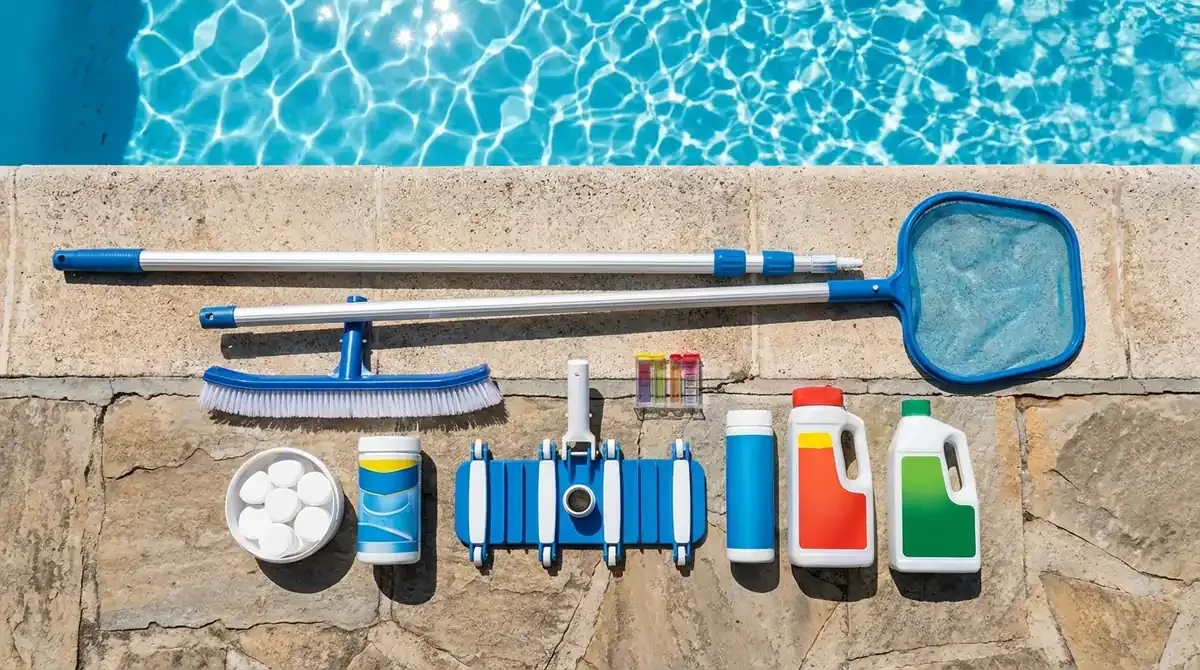
Most vacuuming problems come down to two mistakes: not priming the hose correctly, and vacuuming algae to filter instead of waste. We cover both in detail. If you want the full system behind pool maintenance, our complete pool maintenance guide has the framework.
Video guide
Video: “Top 5 MISTAKES When Vacuuming Your Pool!” by Hallmark Pool Supplies
Is this guide for you?
This guide IS for you if:
- You’re vacuuming your pool for the first time
- You’re vacuuming but it doesn’t seem to be clearing the debris
- You want to know the difference between manual and automatic vacuuming options
This guide is NOT for you if:
- Your vacuum is losing suction and won’t work at all. See our troubleshooting pool vacuum suction guide.
- You’re evaluating whether to buy a robotic cleaner. See our robotic pool cleaner alternative comparison.
Equipment you need for manual vacuuming
Get the equipment ready before you start. Once you prime the hose (the step most beginners skip), you need to move quickly to the skimmer without losing suction.
Required:
- Vacuum head: a weighted head with roller wheels. Choose a size appropriate to your pool width.
- Vacuum hose: 25-35 feet is standard. Measure your pool’s longest diagonal to confirm the hose reaches every corner.
- Telescoping pole: 8-16 feet for most residential pools. Attaches to the vacuum head.
- Skimmer connection: the hose connects to the skimmer suction port (after removing or bypassing the basket) to create suction.
Helpful but optional:
- Skim vac plate / skimmer plate: a flat disc that covers the skimmer basket opening so you don’t have to remove the basket. Maintains better suction.
- Pool brush: use before vacuuming to loosen debris settled on walls and steps.
- Leaf bag: pre-filter attachment for heavy debris loads that would otherwise clog the vacuum hose.
For more guidance on equipment sourcing, see the InYoPools pool vacuuming guide{:target=“_blank”}.
Vacuum to filter vs. vacuum to waste: choose before you start
This decision determines where vacuumed debris goes. Get it wrong and you can make your water worse, not better.
| Mode | When to Use | How to Set |
|---|---|---|
| Vacuum to filter | Normal maintenance, light debris, weekly vacuuming | Multiport valve: “Filter” position (default) |
| Vacuum to waste | Green pool with dead algae; heavy sediment; sand on bottom | Multiport valve: “Waste” position; water level will drop |
Vacuum to waste when:
- Pool is or recently was green from algae. Dead algae particles are fine enough to pass through filter media and recirculate, keeping water cloudy.
- Heavy sediment (sand, dirt, storm debris) on the pool floor. High sediment loads can load up a cartridge filter quickly.
- You want to remove a large volume of debris without running it through the filter at all.
Vacuum to filter when:
- Weekly maintenance with normal leaf and debris accumulation.
- Light debris that won’t overwhelm the filter.
- Your system uses a cartridge filter (cartridge filters don’t have a waste bypass on most models).
How to vacuum a pool: step by step
-
Brush first. Sweep the walls, steps, and pool floor with a brush to loosen settled debris. Let it settle for 15-30 minutes before vacuuming. Skipping this step means the vacuum stirs debris back up rather than picking it up.
-
Set your multiport valve. Decide waste or filter (see the section above) and set the valve before connecting anything.
-
Attach the vacuum head to the telescoping pole. The head clicks or threads onto the pole end.
-
Connect the hose to the vacuum head. Lower the vacuum head to the pool floor.
-
Prime the hose. Hold the open end of the hose against a return jet until all air bubbles stop coming out. The hose is now completely full of water. This step is non-negotiable. Any air left in the hose will break suction the moment you connect to the skimmer.
-
Keep your thumb over the hose end as you walk to the skimmer. Any air bubble you allow in here breaks suction immediately.
-
Connect to the skimmer. Remove the skimmer basket and insert the hose end directly into the suction port at the bottom of the skimmer box. Or place a skim vac plate over the basket opening and insert the hose through the plate’s center.
-
Begin vacuuming. Move in slow, overlapping rows across the pool floor, like mowing a lawn. Do not rush. Fast movement stirs debris back into suspension instead of capturing it.
-
Monitor the skimmer basket and filter pressure. If suction drops mid-session, stop and check the skimmer basket. If it’s full, empty it and resume. If filter pressure rises significantly (8+ PSI above baseline), clean or backwash the filter before continuing. For full guidance, see our guide on cleaning your pool filter.
-
Finish and reset. Remove the hose from the skimmer port and replace the basket. Set the multiport valve back to Filter if you used Waste mode. Top up the water level if vacuuming to waste caused a noticeable drop.
How often should you vacuum your pool?
- Weekly: Standard recommendation for pools with average debris load and regular use.
- After storms: Vacuum within 24 hours of any significant leaf, debris, or dirt event.
- After algae treatment: Vacuum dead algae to waste 24-48 hours after shocking. Do not skip this step.
- After heavy use (pool parties, kids): Vacuum within 24 hours. Heavy use brings body oils and sunscreen into the water that settle as a biofilm on the pool floor.
- Very light use pools with a robotic cleaner running: Biweekly vacuuming may be sufficient.
The rule we use: if you can see debris on the floor, vacuum now. Debris decomposing on the pool floor adds phosphates and organic load to the water, which feeds algae and drives up chlorine demand. Frequent vacuuming is cheaper than algae treatment.
Setting up a weekly pool maintenance schedule that includes vacuuming on a fixed day makes it easier to stay consistent.
The 5 most common pool vacuuming mistakes
These mistakes account for most of the “why isn’t my pool clearing” questions we see. Per the National Spa and Pool Institute maintenance guidelines{:target=“_blank”}, consistent technique matters more than frequency.
1. Vacuuming algae to filter
This is the most damaging mistake. Dead algae particles from a treated green pool are small enough to pass straight through sand and DE filter media. They recirculate as persistent haze. After any algae treatment, set the valve to Waste before vacuuming.
2. Vacuuming too fast
Moving the vacuum head quickly across the pool floor creates turbulence that stirs settled debris back into the water column. The debris becomes suspended and doesn’t get vacuumed at all. Slow, overlapping rows, like mowing a lawn, are the correct technique.
3. Not priming the hose
A hose with air in it loses suction the moment you connect it to the skimmer. Always prime by pressing the open end against a return jet until bubbles stop. This takes 15-30 seconds and prevents suction failure before you even start.
4. Ignoring filter pressure
If filter pressure builds up significantly during vacuuming, the filter is loading up and flow is dropping. Continuing without cleaning or backwashing the filter just prolongs the job and reduces effectiveness. Stop, clean the filter, and resume.
5. Skipping brushing first
Debris caked on walls, steps, and corners doesn’t vacuum well if it’s still stuck. Brush everything first, let it settle to the floor (15-30 minutes), then vacuum. This is especially important after algae treatment, where dead algae clings to surfaces.
Automatic vacuuming options
If manual vacuuming weekly isn’t practical, automatic cleaners handle most or all of the work. Here’s a quick comparison:
Suction-side cleaners (Hayward Navigator, Zodiac Baracuda): connect to the skimmer or a dedicated vacuum port and use the existing pump suction to move around the pool. Cost: $100-$350. Works well for leaves and light debris. Shares suction with the filtration system, so it can reduce overall circulation slightly.
Pressure-side cleaners (Polaris 280, 380): connect to the return line and use a booster pump to propel the cleaner. Has its own debris bag, so it doesn’t load the filter. Cost: $250-$600. Better for heavy debris but requires a booster pump ($300-$500 installed).
Robotic cleaners: self-contained electric units that plug into a standard outlet and operate independently of the pool pump. The best overall performers for debris pickup and scrubbing. Cost: $400-$1,500. For a full comparison, see our robotic pool cleaner alternative guide.
For serious DIY pool owners, we recommend a combination: manual vacuuming weekly for thorough coverage, with a robotic cleaner running mid-week to maintain the floor between sessions. See the Hayward pool equipment FAQ{:target=“_blank”} for suction-side cleaner compatibility with their skimmer models.
For ongoing pool water chemistry basics after vacuuming, especially if you vacuumed to waste and added fresh water, test and rebalance chemistry before swimming.
FAQ
How long does it take to vacuum a pool?
Manual vacuuming takes 20-40 minutes for an average 15,000-20,000 gallon pool with light debris using proper slow-row technique. Pools with heavier debris loads, or pools that need algae vacuumed to waste, can take 45-60 minutes. Using a robotic cleaner reduces active time to near-zero, though the cleaner itself runs 2-3 hours per cycle.
Should I vacuum to waste or filter?
Vacuum to waste when the pool has dead algae from a recent treatment, or when there’s heavy sediment or sand on the floor. Vacuum to filter for normal weekly maintenance with leaf and debris accumulation. When in doubt for an algae situation, always choose waste. Vacuuming dead algae to filter will keep your pool cloudy despite balanced chemistry.
Why does my pool vacuum lose suction?
The most common causes are a full skimmer basket, air in the vacuum hose from improper priming, a kinked or disconnected hose section, or a full pump basket. See our troubleshooting pool vacuum suction guide for the full step-by-step diagnostic.
Do I need to brush before vacuuming?
Yes. Debris stuck to walls, steps, and corners won’t vacuum effectively while it’s adhered to the surface. Brushing first dislodges it, lets it settle to the floor, and then vacuuming captures it all in one pass. Skipping brushing means the vacuum stirs things up without fully collecting them.
Can I vacuum a pool with a cartridge filter?
Yes, but you can only vacuum to filter mode. Most cartridge filter systems don’t have a multiport valve with a Waste setting. Vacuum normally and clean or replace the cartridge filter after heavy debris sessions, since cartridges load up faster than sand or DE during heavy-debris vacuuming.